Huayang Center for Maritime Cooperation and Ocean Governance
The 7th Symposium on Global Maritime Cooperation and Ocean Governance Opens in Sanya
On November 6, the 7th Symposium on Global Maritime Cooperation and Ocean Governance (GMCOG) opened in Sanya, Hainan Province, China. The symposium is jointly hosted by the Huayang Center for Maritime Cooperation and Ocean Governance (Huayang Center), the National Institute for South China Sea Studies (NISCSS), the China Oceanic Development Foundation, and the Hainan Institute for Free Trade Port Studies, with the Chinese Global Programs Center of China Media Group as co-organizer. More than 400 participants from over 30 countries and regions, including experts and scholars, government officials, representatives of foreign embassies and consulates in China, international organizations, maritime-related agencies, and media organizations, attended the symposium. More than 8,000 online registrations were recorded for the event.
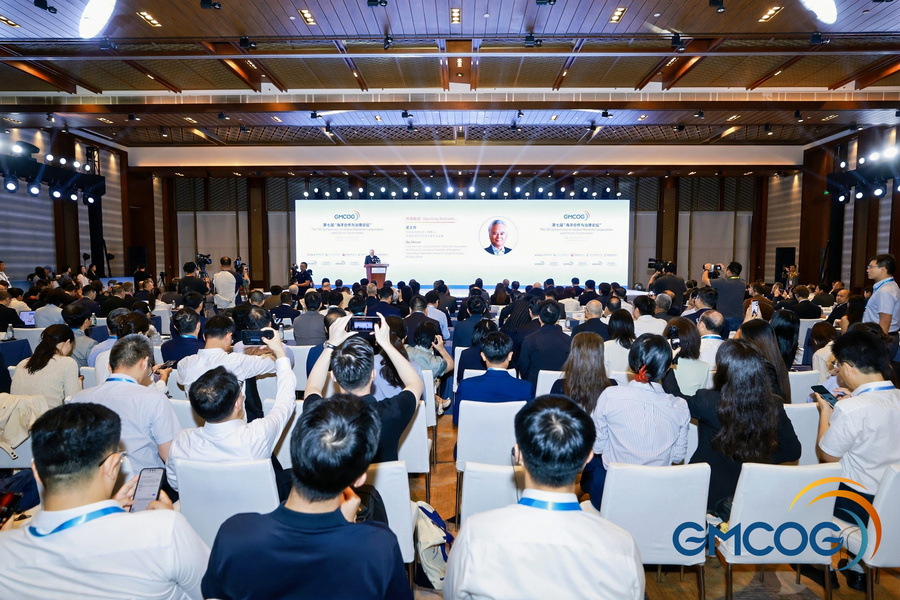
Liu Xiaoming, Governor of Hainan Province; Zhao Zhiyuan, Assistant Minister of Foreign Affairs of China; Sun Shuxian, Vice Minister of Natural Resources and Administrator of the State Oceanic Administration of China; Wang Kun, Administrator of the China Earthquake Administration; Sakti Wahyu Trenggono, Minister of Marine Affairs and Fisheries of Indonesia; George Yeo, Former Minister of Foreign Affairs of Singapore; Ahmed Shiyam, Minister of Fisheries, Agriculture and Ocean Resources of the Maldives; Liu Zhenmin, China’s Special Envoy for Climate Change and Former Under-Secretary-General of the United Nations; Stephen Orlins, President of the National Committee on U.S.-China Relations; and Lv Bin, President of the China Oceanic Development Foundation, delivered keynote speeches. Wu Shicun, Chairman of the Huayang Center and Chairman of the Academic Committee of NISCSS, delivered the opening remarks.

Keynote Speech by Liu Xiaoming, Governor of Hainan Province
Liu Xiaoming noted that the opening of the symposium coincided with the first anniversary of President Xi Jinping receiving the briefing on the development of the Hainan Free Trade Port in Sanya on November 6, 2025, giving the occasion special significance.
He stated that since the launch of island-wide special customs operations, the Hainan Free Trade Port has maintained smooth and orderly operations, demonstrating positive development trends characterized by more favorable policies, greater popularity, stronger consumer spending, and a growing number of businesses.
In recent years, Hainan has accelerated the development of a modern marine industrial system with distinctive local characteristics. Efforts have focused on upgrading marine tourism, transforming the fisheries sector, promoting the green transition of traditional marine industries, developing emerging industries such as offshore wind power and marine biomedicine, and advancing deep-sea scientific and technological innovation platforms alongside marine ecological conservation and restoration.
To deepen maritime cooperation and strengthen ocean governance, Liu put forward four proposals: first, to build blue partnerships and deepen practical cooperation in marine industries; second, to promote marine scientific and technological innovation through joint research and the sharing of achievements; third, to protect the marine environment and advance sustainable blue development; and fourth, to jointly develop ocean governance rules and improve regional cooperation mechanisms.

Keynote Speech by Zhao Zhiyuan, Assistant Minister of Foreign Affairs of China
Zhao Zhiyuan stated that President Xi Jinping's Global Development Initiative, Global Security Initiative, Global Civilization Initiative, and Global Governance Initiative have provided guidance for building a maritime community with a shared future. He called on the international community to strengthen solidarity and cooperation to jointly promote the sound development of global maritime affairs.
He outlined four priorities: first, to uphold fairness and justice and build a civilized maritime order; second, to pursue inclusive and mutually beneficial cooperation and strengthen maritime partnerships; third, to advocate solidarity and inclusiveness and enhance maritime security cooperation; and fourth, to embrace a shared future and jointly safeguard the oceans.
Zhao emphasized that, as a responsible major maritime country, China has consistently contributed to global maritime cooperation and ocean governance. Looking ahead, China will remain firmly committed to practicing international maritime cooperation, safeguarding the international maritime order, and contributing to global ocean governance. Through these efforts, China will make greater contributions to the development of global maritime affairs and demonstrate a stronger commitment to advancing the common well-being of humanity.

Keynote Speech by Sun Shuxian, Vice Minister of Natural Resources and Administrator of the State Oceanic Administration of China
Sun Shuxian delivered a keynote speech via video. He noted that since the beginning of China's 14th Five-Year Plan period, the country's marine economy has maintained steady growth, its capacity for marine scientific and technological innovation has improved significantly, marine ecological conservation and restoration have achieved continued progress, and international maritime cooperation has deepened.
Looking ahead, Sun expressed China's willingness to work with all parties to safeguard maritime peace and sustainable development through three areas of cooperation.
First, China will actively participate in global ocean governance and promote the development of a more just and equitable global ocean governance system. Second, China will deepen and expand practical maritime cooperation, particularly in emerging fields such as marine renewable energy, marine biotechnology, deep-sea exploration, marine big data, and artificial intelligence. Third, China will uphold inclusiveness and common development by promoting exchanges of marine scientific knowledge, technologies, data, and standards, while continuing to support maritime capacity-building in developing countries.

Keynote Speech by Sakti Wahyu Trenggono, Minister of Marine Affairs and Fisheries of Indonesia
Sakti Wahyu Trenggono emphasized the importance of strengthening international cooperation in addressing shared challenges, including climate change, marine pollution, biodiversity loss, and declining fish stocks.
He called for stronger ASEAN-China cooperation in sustainable fisheries, marine conservation, maritime security, marine science, and the blue economy. He also expressed support for the effective implementation of the Agreement on the Conservation and Sustainable Use of Marine Biological Diversity of Areas beyond National Jurisdiction (BBNJ Agreement).
Trenggono stressed four guiding principles for maritime cooperation: adherence to international law, science-based decision-making, equitable sharing of benefits derived from marine resources, and strengthened capacity-building.

Keynote Speech by Wang Kun, Administrator of the China Earthquake Administration
Wang Kun highlighted that submarine earthquakes, tsunamis, and underwater landslides have become significant risks to the sustainable development of the global marine economy.
He introduced China's practices in marine disaster monitoring and detection, ensuring the safety of major marine engineering projects, and international cooperation on disaster prevention and mitigation.
Wang expressed China's willingness to work with other countries to enhance coordinated responses to transboundary marine disasters by jointly establishing early-warning networks, advancing technological research, strengthening coordinated emergency response mechanisms, and sharing development achievements.

Keynote Speech by George Yeo, Former Minister of Foreign Affairs of Singapore
George Yeo observed that emerging technologies, including artificial intelligence, will deepen humanity's understanding of the oceans and create greater opportunities for cooperation.
He suggested that parties concerned with the South China Sea should strengthen dialogue and exchanges, foster friendship and mutual trust, and seek common solutions.
Yeo also called for enhanced cooperation across the entire fisheries value chain, as well as in tourism, earthquake early warning, climate change, maritime security, and maritime search and rescue.

Keynote Speech by Ahmed Shiyam, Minister of Fisheries, Agriculture and Ocean Resources of the Maldives
Ahmed Shiyam emphasized that the oceans are vital to food security, economic development, and people's livelihoods in small island developing states.
He expressed the Maldives’ willingness to deepen cooperation with China and other partners in fisheries technology exchanges, responsible investment, and marine ecological conservation.
Shiyam also highlighted the importance of improving the quality and market competitiveness of the Maldives' tuna industry while strengthening regional fisheries governance and cooperation in marine scientific research.

Keynote Speech by Liu Zhenmin, China's Special Envoy for Climate Change and Former Under-Secretary-General of the United Nations
In a video keynote speech, Liu Zhenmin highlighted multiple challenges facing the world's oceans, including growing pressures from human activities, intensifying impacts of climate change, biodiversity loss, marine pollution, and the fragmentation of ocean governance frameworks.
He noted that China has long been an active participant in global ocean governance and has worked to promote a more just and equitable maritime order.
Liu put forward four recommendations: first, to uphold the principles of sustainable development and promote marine ecological civilization; second, to attach greater importance to the interactions between global marine ecosystems and climate change; third, to advance integrated land-sea management and coordinated ocean governance; and fourth, to adopt a systemic approach and strengthen holistic ocean governance.

Keynote Speech by Stephen Orlins, President of the National Committee on U.S.-China Relations
In his video keynote speech, Stephen A. Orlins cited the Chinese saying “同舟共济”—pulling together in the same boat—to highlight the shared concerns of China and the United States on maritime issues.
He recommended strengthening military-to-military communication at all levels, improving rules governing maritime operations, enhancing relevant personnel training, and maintaining expert dialogues and international exchanges on maritime affairs.

Keynote Speech by Lv Bin, President of the China Oceanic Development Foundation
Lv Bin noted that global ocean governance currently faces multiple challenges, including the implementation of international rules, competition among major powers, the sharing of scientific research data, and the limited capacity of developing countries to participate in governance processes.
At the same time, rapid advances in marine science and technology are providing new tools and continuously expanding the capacity for ocean governance.
Lv called for addressing challenges through cooperation and seizing opportunities through innovation, with the aim of steadily advancing global ocean governance toward a more equitable, effective, and sustainable future.

Opening Remarks by Wu Shicun, Chairman of the Huayang Center and Chairman of the Academic Committee of NISCSS
Wu Shicun reviewed the development of the symposium since its establishment in 2020.
He emphasized that the symposium has consistently upheld the principles of openness and inclusiveness, encouraging participants to express diverse and reasoned perspectives. He stressed the importance of moving beyond discussions to concrete action.
Wu expressed his hope that, through collective efforts, the symposium would develop into an internationally influential academic platform in the maritime field, a catalyst for building mutual trust and expanding consensus among participants, and an important vehicle for advancing global ocean governance and non-exclusive maritime cooperation.
During the three-day conference, participants will engage in in-depth discussions on a wide range of topics, including: "Navigating Change and Reconfiguration in Global Ocean Governance Amid an Era of Turmoil"; "Advancing Rule-of-Law-Guided Maritime Governance Through Coordinated Security and Rule-Making in the South China Sea"; "Advancing the BBNJ Agreement from Normative Consensus to Practical Implementation"; "Shaping a New Order in the South China Sea Through a Path of Cooperation"; "Exploring Emerging Frontiers in Ocean Governance with a Focus on the Arctic, Navigational Safety and Beyond"; "Anchoring Certainty Through Shared Vision and Action for Global Ocean Governance"; "The Strategic Role of 'Creating a New Maritime Hainan': Hainan Free Trade Port under the Framework of the China-ASEAN Blue Economic Partnership."
The symposium also features parallel sessions and a young scholars' roundtable covering ocean conservation and governance in the age of artificial intelligence, the application of aerospace information technologies to ocean governance, the development of offshore renewable energy, and marine economic cooperation between Hainan and Jiangsu provinces. The Global Ocean Security Report 2025–2026 and the outcomes of practical maritime cooperation projects will also be released during the symposium.
Since its establishment in 2020, the Symposium on Global Maritime Cooperation and Ocean Governance has been held annually, evolving from an international academic conference into an important platform for exchanges and cooperation on maritime affairs with broad international influence.
Focusing on emerging issues in global ocean governance, international maritime cooperation, and blue economy development, the symposium brings together representatives from universities, research institutions, and maritime-related international organizations for in-depth dialogue and discussion. It continues to provide momentum for research and practical cooperation in maritime affairs worldwide.
The symposium is committed to exploring equitable and effective global governance solutions aligned with broader historical trends, while identifying pathways for ocean governance grounded in multilateralism and globalism. Through these efforts, it seeks to contribute knowledge and expertise to deepening international maritime cooperation and improving global ocean governance.


Wu Shicun was interviewed by several media outlets during the symposium.