Huayang Center for Maritime Cooperation and Ocean Governance
Huayang Biweekly Brief, Volume 1, Issue 4, 2026
Huayang Biweekly Brief: The South China Sea and China, Volume 1, Issue 4, 2026
Key Takeaways
• Maritime tensions between China and the Philippines remain a major focus of South China Sea developments.
• China continues to strengthen its presence and governance around Huangyan Dao through multiple instruments.
• China maintains maritime cooperation with neighboring countries while criticizing external actors’ involvement in the South China Sea disputes.
• Beyond maritime security, China continues to advance environmental conservation, marine science, and connectivity initiatives related to the South China Sea.
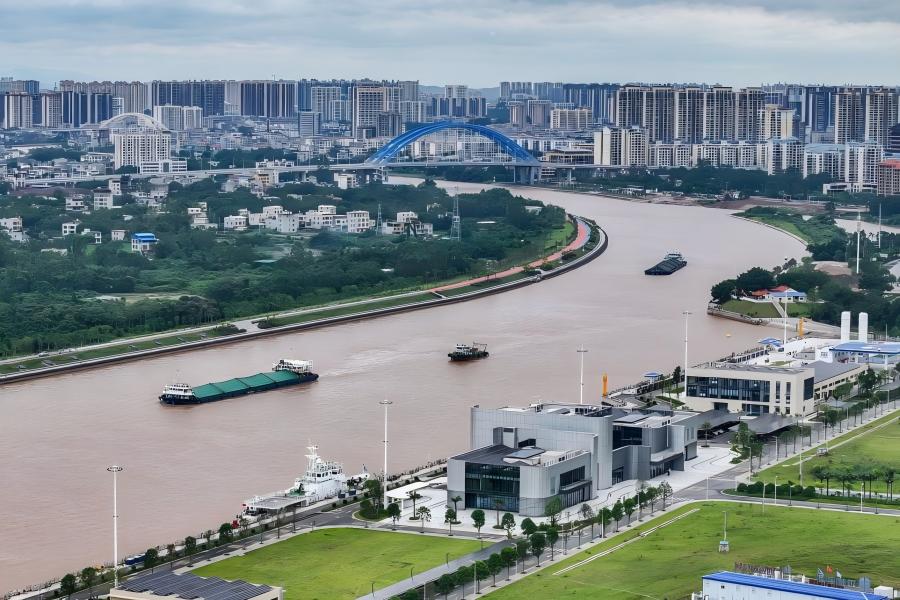
The Pinglu Canal opened up a new southward waterway linking southwest China directly to the Beibu Gulf. Shipping cargo from southwest China to the sea via the canal can shorten the journey by more than 560 kilometers compared with existing routes and reduce overall logistics costs by 18% to 30%. Photo credit: Xinhuanet.
SEPTEMBER 16
China Releases Recent Integrated Multidisciplinary Geological Survey Updates in Huangyan Dao Waters.
According to an official announcement by the Ministry of Natural Resources (MNR) on September 16, the survey vessel Haiyang Dizhi-10 of the China Geological Survey under the MNR conducted an integrated multidisciplinary geological survey in China’s Huangyan Dao waters from August 11 to September 8 to comprehensively assess the basic geological features and ecological conditions of waters under China’s jurisdiction.
The survey integrated multiple disciplinary methods to collect basic data on marine hydrology, sedimentary strata, and geophysical fields, as well as samples of seawater, marine organisms, marine sediments, and seabed rocks. The data provided reliable first-hand basis for further understanding the geological and geophysical characteristics and current ecological conditions of the area, studying seabed sediment types, stratigraphic structure, potential geological hazards, tectonic evolution, and assessing marine environmental quality. The survey also provides a scientific basis for China’s comprehensive governance of the Huangyan Dao waters.
Pinglu Canal Opens to Navigation.
The Pinglu Canal, a key component of the New International Land-Sea Trade Corridor in Western China, was completed and opened to navigation. It starts at the Pingtang River mouth in Hengzhou, Nanning City of Guangxi Zhuang Autonomous Region, flowing along the Qin River into the Beibu Gulf. Built to Class I inland waterway standards—the highest navigation class in China—the canal can accommodate 5,000-tonne vessels.
The canal provides a direct shipping route connecting southwest China with the ASEAN countries. Shipping cargo from southwest China shipped to the sea via the Pinglu Canal shortens the inland waterway journey by more than 560 kilometers compared with shipping via Guangzhou Port.
China (Hainan)–ASEAN 2026 Think Tank Forum Held in Haikou, China.
The China (Hainan)–ASEAN 2026 Think Tank Forum, jointly hosted by the National Institute for South China Sea Studies (NISCSS), the Hainan Federation of Social Sciences, and the Huayang Center for Maritime Cooperation and Ocean Governance, was held in Haikou. The two-day forum was themed “Institutional Opening-Up and New Quality Maritime Productive Forces: Forging New Drivers for China-ASEAN Blue Economic Cooperation.” More than 1,000 experts and scholars from seven countries—China, Thailand, Cambodia, Malaysia, Singapore, Indonesia, and the Philippines—participated online and in person. They held in-depth discussions and exchanges on topics including Hainan Free Trade Port, China-ASEAN blue economic cooperation and South China Sea governance, sharing expertise and research insights to deepen Hainan–ASEAN think tank cooperation and advance China–ASEAN blue economy cooperation.

The China (Hainan)–ASEAN 2026 Think Tank Forum was held in Haikou, Hainan, China. The two-day forum brought together more than 1,000 experts and scholars from seven countries—China, Thailand, Cambodia, Malaysia, Singapore, Indonesia, and the Philippines—who participated both online and in person. Photo credit: China Daily.
13th Beijing Xiangshan Forum Focuses on Stability and Security Governance.
The 13th Beijing Xiangshan Forum was held in Beijing from September 15 to 17 under the theme “Build Consensus on Stability, Advance Security Governance Together.” Marking its 20th anniversary, the forum brought together military and security officials, scholars and experts from across the world for dialogue on international and regional security.
Speaking on South China Sea security during a media interview at the forum, Wu Shicun, Chairman of the Huayang Center for Maritime Cooperation and Ocean Governance, commented on the military developments of Australia and Japan in the South China Sea. He said that Australia was seeking geopolitical gains and warned that Japan’s moves could undermine peace, stability, and cooperation in the South China Sea, as well as consultations on the Code of Conduct in the South China Sea (COC). China should remain vigilant in this regard.
SEPTEMBER 17
China Responds to Poland’s Remarks on the South China Sea Issue.
Ji Lingpeng, spokesperson of the Chinese Embassy in the Philippines, reiterated China’s position on the “South China Sea arbitration award” in response to remarks by Władysław Teofil Bartoszewski, Secretary of State at the Ministry of Foreign Affairs of Poland, that China was obliged to comply with the award and that Poland supported the Philippines on the issue.
Ji stated that the “award” violates basic principles of international law such as “state consent” and “pacta sunt servanda,” violates the United Nations Convention on the Law of the Sea (UNCLOS), and runs counter to the basic facts of the South China Sea. He described it as a piece of waste paper that is illegal, null and void, and has no binding force. He reiterated that China’s position on the “award” is consistent and clear: China does not accept or recognize it and opposes any claims or actions based on it. Noting that Poland is not a party to the South China Sea issue, Ji urged the Polish side to respect China’s territorial sovereignty and maritime rights and interests in the South China Sea, exercise prudence in its words and deeds, and stop endorsing and backing the illegal “award.”
China Ocean Development Index Report 2026 Released in Qingdao, China.
The 2026 Global Ocean Development Forum, co-hosted by the Shandong Provincial People’s Government and the Ministry of Natural Resources, opened in Qingdao, with the theme of “From Blue to the Future—Developing a Sustainable Ocean Economy and Building a Beautiful and Bountiful Ocean.” At the forum, the China Ocean Development Index Report 2026 was released. According to the report, China’s Ocean Development Index stood at 132.3 in 2025, up 2.5% year on year, indicating steady progress in high-quality marine economic development and new achievements in building a maritime power. The report also highlighted advances in technologies and equipment for deep-sea exploration, marine renewable energy and digital and intelligent applications. These include a drilling and monitoring system for subsurface formations at natural gas hydrate trial production sites, which completed sea trials in the South China Sea waters more than 1,200 meters deep.
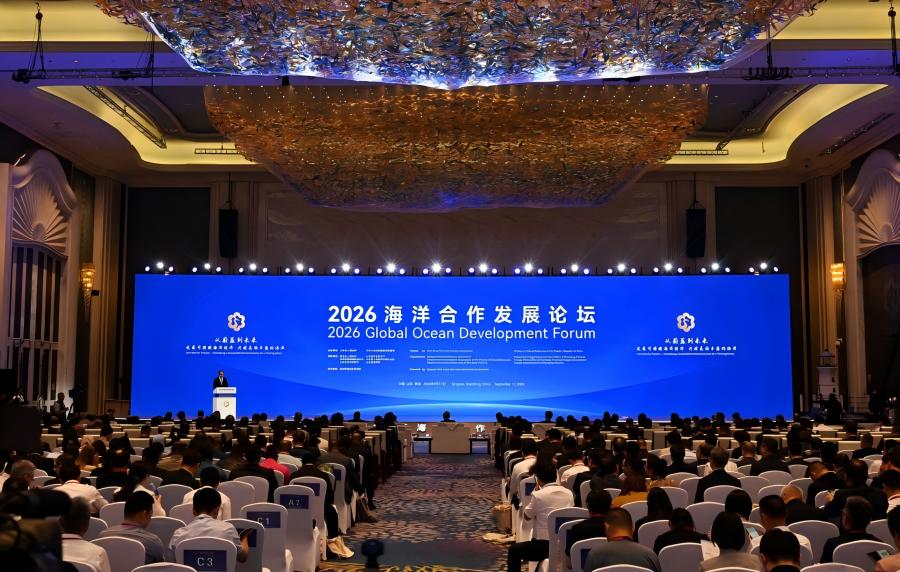
The 2026 Global Ocean Development Forumopened in Qingdao, Shandong, China. The China Ocean Development Index Report 2026 was released at the forum, highlighting China’s steady progress in high-quality marine economic developmentand new achievements in building a maritime power. Photo credit: China Natural Resources News.
SEPTEMBER 18
A Philippine Vessel Accelerates to Ram CCG Vessel Near Xianbin Jiao.
The China Coast Guard (CCG) spokesperson Jiang Lue stated on September 18 that on that day, the CCG vessel Sanzhou’ao conducted rights-protection law enforcement operations in waters near Xianbin Jiao of China’s Nansha Qundao in accordance with law. Philippine vessel No. 3015 ignored repeated stern warnings from the Chinese side, deliberately altered its course, suddenly accelerated and cut diagonally across the bow of the CCG vessel, resulting in a collision.
Video evidence obtained on site by Global Times reporters shows that during the Philippine side’s provocative operation, Philippine vessel No. 3015 twice attempted to cut diagonally across the bow of the CCG vessel from its starboard side. During the second provocation by Philippine vessel No. 3015 against the CCG vessel, the Philippine vessel caused the two ships to collide due to improper maneuvering. By contrast, the CCG vessel Sanzhou’ao maintained a straight course throughout, kept its heading stable, and operated in a standardized manner at all times.
It is reported that Philippine vessels of No. 3015’s type have frequently participated in Philippine provocative operations in the South China Sea and have repeatedly collided with the CCG vessels.
China Responds to Philippine Vessel’s Ramming of a CCG Vessel.
In response to the ramming of the CCG vessel Sanzhou’ao by Philippine vessel No. 3015, the CCG spokesperson Jiang Lue said the Philippine side’s actions seriously violated international law and the basic norms of international relations, threatened the safety of CCG vessels and personnel. He stated that the CCG vessel operated in a professional, standardized, reasonable and lawful manner, and that the responsibility rests entirely with the Philippine side. Jiang urged the Philippines to immediately cease all infringing and provocative acts, or it would bear all resulting consequences, and reiterated that the CCG will continue law enforcement operations in waters under China’s jurisdiction.
On the same day, Chinese Foreign Ministry spokesperson Guo Jiakun said the Philippines should immediately stop its maritime infringements and stop spreading false narratives and disinformation. He reiterated that China will continue to safeguard its territorial sovereignty and maritime rights and interests and uphold peace and stability in the South China Sea.
In a related development, the Chinese Embassy in the Philippines strongly condemned the United States’ verbal support for the Philippines’ infringing and provocative acts mentioned above, in response to U.S. Ambassador to the Philippines Lee Lipton’s remarks on X, in which Lee falsely claimed what he described as the CCG’s “deliberate ramming” of the Philippine vessel and expressed support for the Philippines. The Chinese Embassy urged the U.S. side to stop spreading false narratives, deliberately distorting facts and confusing right and wrong.
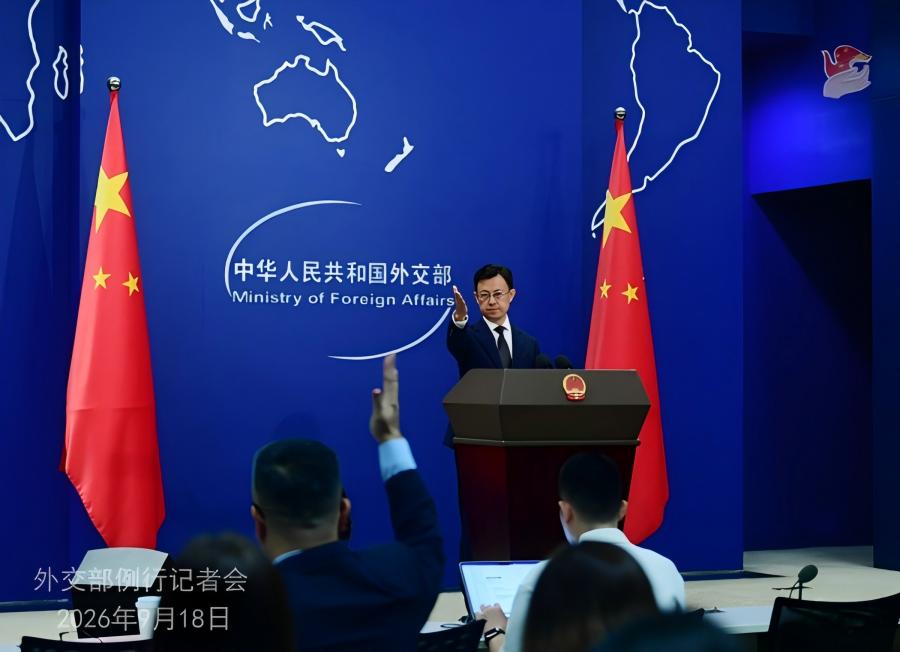
Chinese Foreign Ministry spokesperson Guo Jiakun responded to the Philippine vessel’s deliberate ramming of an on-duty CCG vessel in waters near Xianbin Jiao, Nansha Qundao. Earlier that day, CCG Spokesperson Jiang Lue issued a statement on the incident. Both condemned the Philippine side’s unlawful actions and reaffirmed China’s legitimate position. Photo credit: MFA, China.
Sansha City Continues to Advance Marine Ecological Conservation in the South China Sea.
According to China Central Television (CCTV), Sansha City in Hainan Province, China’s southernmost city and its smallest by land area, has continued to advance ecological conservation projects including coral reef restoration, island and reef greening, and coastline restoration, systematically restoring and protecting the marine ecological environment of the South China Sea. Sansha has cultivated 143,000 coral seedlings and planted 240,000 corals over the past five years. In 2025, coral coverage on the reef southeast of Yongxing Dao reached 80.16%, and fish abundance reached 125.6 individuals per square meter. As part of its island and reef greening efforts, the city has cultivated and transplanted more than 100,000 native seedlings over the past three years, adding about 90,000 square meters of greening and landscaped space.
SEPTEMBER 20
Symposium on South China Sea Coral Reef Conservation and Sustainable Development Held in Sanya, China.
The 2026 South China Sea Coral Reef Conservation and Sustainable Development Symposium and the 2026 Annual Academic Meeting of the Coral Reef Branch of the Pacific Society of China (PSC) were held from September 20 to 21 in Yazhou Bay, Sanya. The Hainan Sanya Coral Reef National Nature Reserve’s main event marking National Coral Day (September 20) was held concurrently. Marine scientists, reserve management personnel, and nonprofit practitioners from across the country held in-depth discussions on seven themes, including coral reef biodiversity, ecological restoration technologies, integrated multi-dimensional monitoring and assessment, public participation, and management and conservation, exploring new models for collaboration among stakeholders in coral reef conservation.
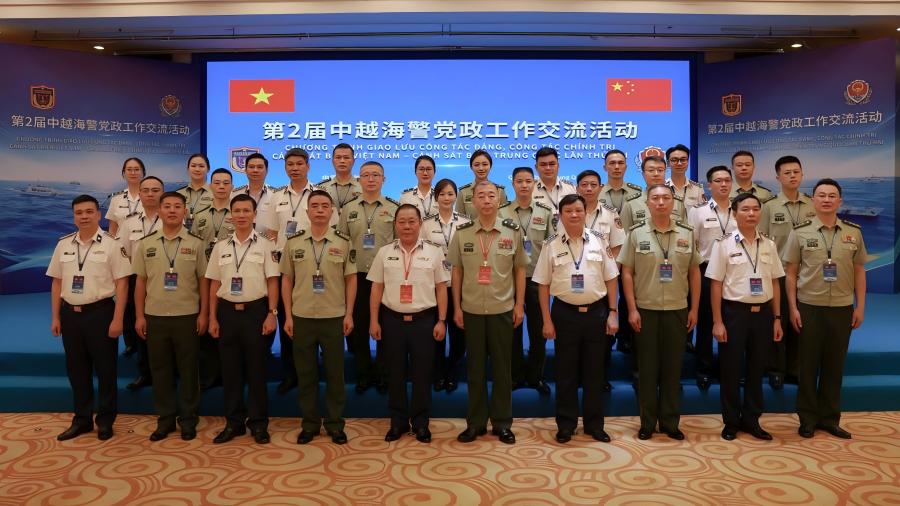
The Second China Coast Guard-Vietnam Coast Guard Exchange Program on Party and Political Work kicked off in Guangzhou. Photo credit: China Daily.
SEPTEMBER 21
The Second China Coast Guard–Vietnam Coast Guard Exchange Program on Party and Political Work Kicks off in Guangzhou.
Wang Xiaobing, political commissar of CCG Nanhai Branch, and Major General Tran Van Hau, political commissar of Vietnam Coast Guard Region 1, attended the opening ceremony. Heads and senior officers of political work, international cooperation, and relevant functional departments from both coast guard services also participated in the event. The exchange is intended to strengthen dialogue and communication and deepen practical cooperation between the two coast guards. Through in-depth dialogue at the Party and government work level, the event seeks to further consolidate the traditional friendship between the Chinese and Vietnamese coast guard forces, explore new pathways for maritime law-enforcement cooperation, and contribute coast guard-specific efforts to building a maritime community with a shared future.
SEPTEMBER 24
China Responds to Philippines’ Field Training Exercise Near Huangyan Dao.
Chinese Ministry of National Defense spokesperson Jiang Bin responded to the Philippines’ recent efforts to rally some countries to conduct a field training exercise under the ASEAN Defence Ministers’ Meeting-Plus (ADMM-Plus) Experts’ Working Group (EWG) on Maritime Security near Huangyan Dao.
Jiang stated that the ADMM-Plus is an important platform for countries to enhance mutual trust and cooperation and to safeguard regional peace and stability. He accused the Philippines of taking advantage of its role as EWG co-chair to disregard the principle of consensus through consultation and co-opt relevant countries into conducting a joint military exercise near Huangyan Dao. Jiang described the exercise as a provocation and propaganda in the name of security cooperation, warning that it will only disrupt regional peace and stability and runs counter to the regional consensus on preserving peace and promoting development. Jiang reiterated that Huangyan Dao is an inherent part of China’s territory. He urged the Philippines to end the “clumsy farce,” fulfill its responsibilities as EWG co-chair, and play a constructive role in promoting regional dialogue and cooperation and safeguarding peace and stability in the South China Sea.
China Urges Japan to Stop Sowing Discord in the South China Sea.
Following what China described as a provocation by a Philippine government vessel near Xianbin Jiao in China’s Nansha Qundao, the Japanese Embassy in the Philippines expressed “grave concern” over China’s “dangerous actions” and claimed to uphold the rule of law.
In response, Ministry of National Defense spokesperson Senior Colonel Jiang Bin said that the facts surrounding the Philippine vessel’s provocation and deliberate ramming of a CCG vessel were clear. He criticized Japan, which is not directly involved in the South China Sea issue, for siding with the Philippines and distorting the facts to “make waves” in the South China Sea and “fish in muddy waters.”
Jiang also accused Japan of deepening military collusion with the Philippines through arms transfers and joint exercises, during which Japan launched offensive missiles overseas for the first time. He said that such actions reflected Japan’s attempt to break away from the post-war international order and revive its old dream of military expansion, posing a real threat to regional peace and stability. Jiang urged Japan to offer a clear explanation of its accelerating “remilitarization” efforts, and stop sowing discord and undermining peace and stability in the South China Sea.
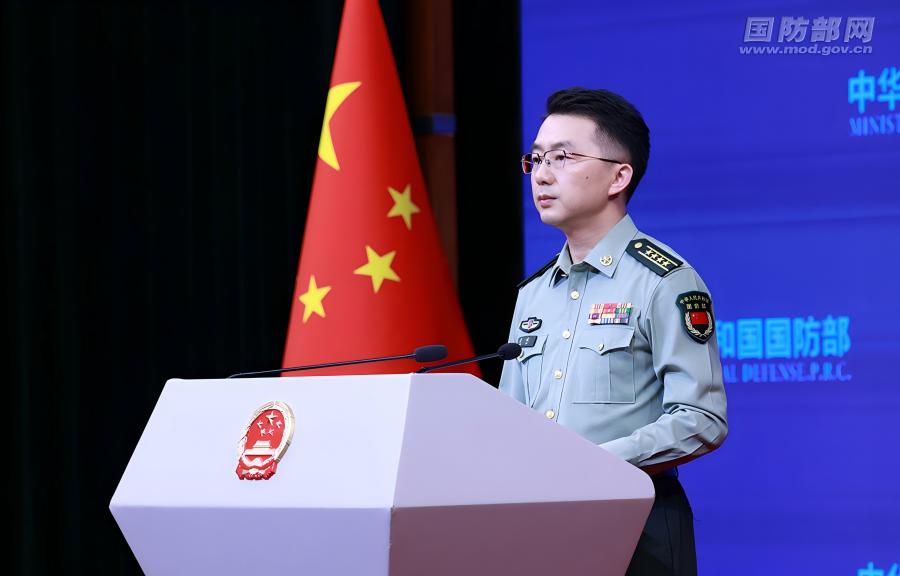
On the afternoon of September 24, 2026, Senior Colonel Jiang Bin, spokesperson for China’s Ministry of National Defense, answered media questions on recent military developments. Photo credit: MFA, China.
China Condemns Philippine Illegal Resupply Operation at Ren’ai Jiao.
Jiang Lue, spokesperson for the CCG, said that the Philippines had reneged on its commitments, disregarded China’s warnings and willfully sent a supply vessel to deliver supplies to the illegally “grounded” warship at Ren’ai Jiao. The CCG tracked and monitored the resupply vessel and issued verbal warnings in accordance with the law.
Jiang said the Philippine actions, including provocations during a Chinese holiday period and efforts to hype up the incident, seriously violated the Declaration on the Conduct of Parties in the South China Sea (DOC) and undermined regional peace and stability. He urged the Philippines to immediately cease its provocations, adding that the CCG would continue law-enforcement operations in the Nansha Qundao, including Ren’ai Jiao and its surrounding waters, to safeguard China’s territorial sovereignty and maritime rights and interests.
China Condemns Philippine Illegal Resupply Operation at Ren’ai Jiao.
Jiang Lue, spokesperson for the CCG, said that the Philippines had reneged on its commitments, disregarded China’s warnings and willfully sent a supply vessel to deliver supplies to the illegally “grounded” warship at Ren’ai Jiao. The CCG tracked and monitored the resupply vessel and issued verbal warnings in accordance with the law.
Jiang said the Philippine actions, including provocations during a Chinese holiday period and efforts to hype up the incident, seriously violated the Declaration on the Conduct of Parties in the South China Sea (DOC) and undermined regional peace and stability. He urged the Philippines to immediately cease its provocations, adding that the CCG would continue law-enforcement operations in the Nansha Qundao, including Ren’ai Jiao and its surrounding waters, to safeguard China’s territorial sovereignty and maritime rights and interests.
SEPTEMBER 25
CCG Conducts Law-Enforcement Patrol in Huangyan Dao National Nature Reserve.
According to CCTV News, a CCG formation, including the Wanshan and Chuanshan vessels, recently conducted a law-enforcement patrol in the Huangyan Dao National Nature Reserve. Coast Guard patrol boats inspected vessel activity in surrounding waters and took action against violations involving damage to coral reefs and habitats of rare species. Officers would also monitor coral growth to provide baseline environmental data for relevant authorities. The CCG said enforcement measures would be taken against activities such as coral harvesting and unauthorized entry into the reserve.
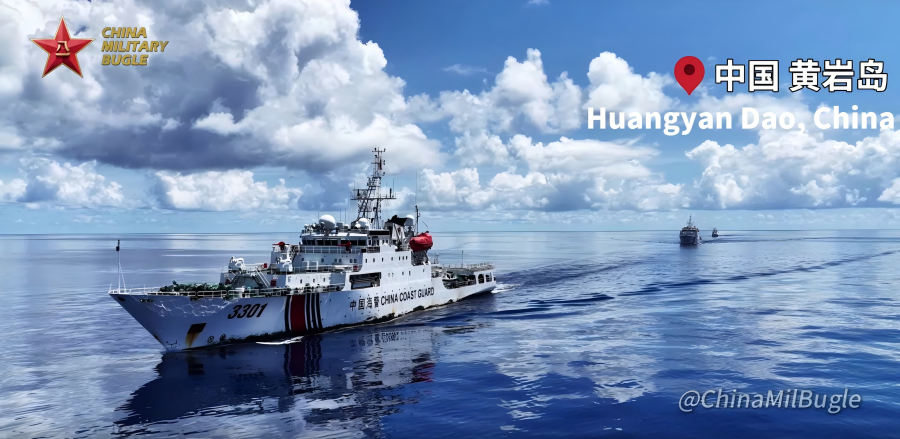
The CCG conducted drills on maritime rights protection, law enforcement, and management and maritime control in the waters near Huangyan Dao. Photo credit: China Military Online.
SEPTEMBER 27
China Conducts CCG and PLA Operations Near Huangyan Dao.
CCG spokesperson Jiang Lue stated that the CCG conducted drills on maritime rights-protection, law enforcement, and management and control in the waters near Huangyan Dao, focusing on operations including boarding and inspection, interdiction of intrusion, and forced towing. He said the CCG would strengthen rights-protection, law-enforcement, and control operations in the area to safeguard China’s territorial sovereignty and maritime rights and interests.
On the same day, the Chinese People’s Liberation Army (PLA) Southern Theater Command (STC) conducted a joint naval-air training exercise in the waters and airspace around Huangyan Dao. The command said the exercise is a necessary response to actions by certain countries that undermine regional peace and stability, and was intended to test and enhance the troops’ combat capabilities in safeguarding China’s territorial sovereignty and maritime rights and interests.
China Responds to Philippine Defense Secretary’s Remarks on China.
Philippine Defense Secretary Gilberto Teodoro Jr. again criticized China while speaking on issues including the South China Sea during a forum on September 26. In response, Ji Lingpeng, spokesperson for the Chinese Embassy in the Philippines, described Teodoro as “extremely anti-China” and accused him of repeatedly attacking and smearing China for political and personal gain. Ji said Teodoro’s remarks disregarded facts, distorted right and wrong, and sought to undermine China-Philippines relations and sow division between the two countries and their peoples, adding that such efforts were bound to fail.
SEPTEMBER 28
China Advances Deep-Sea Drilling Capability to 5,000 Meters.
China’s Mengxiang (Dream) ocean drilling vessel has set a national record in deep-sea drilling, elevating China’s capability to the 5,000-meter level, after obtaining basalt samples from the South China Sea basin.
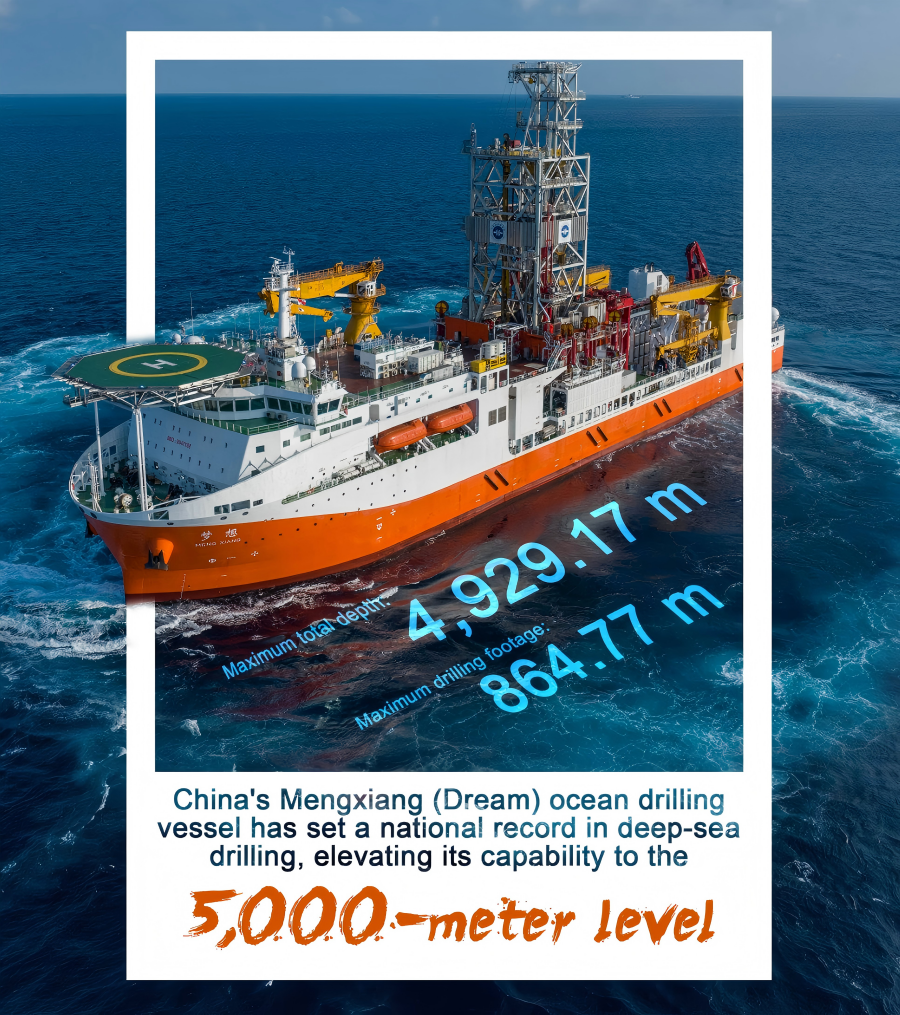
China’s deep-sea drilling capability reached the 5,000-meter level, making China the third country—after the U.S. and Japan—to retrieve hard-rock samples from a deep-sea ocean basin using a drilling vessel. Photo credit: Global Times.
China Responds to U.S. Support for Philippine Resupply Operation at Ren’ai Jiao.
The exchange of statements followed a September 24 resupply operation by the Philippines at Ren’ai Jiao, during which China said the CCG monitored the Philippine vessel and issued repeated warnings. On September 27, the U.S. Embassy in the Philippines condemned China’s actions, alleging that the CCG and the People’s Liberation Army Navy (PLAN) had prevented a “lawful and routine” resupply mission to Ren’ai Jiao and expressing support for the Philippines.
On the same day, the Chinese Embassy in the Philippines rejected the U.S. characterization of the incident, strongly condemning the U.S. Embassy’s support for the Philippines’ “provocative and unlawful actions” at Ren’ai Jiao. The Embassy reiterated that the Philippines had breached its commitments and proceeded with the resupply mission despite China’s warnings. The Embassy urged the U.S. to stop “fanning the flames” and refrain from actions that undermine regional peace and stability.
SEPTEMBER 29
China Rejects Philippine “Maritime Chart” Covering Nansha Islands and Reefs.
Chinese Foreign Ministry spokesperson Guo Jiakun said that Zhongye Dao and Mahuan Dao are part of China’s Nansha Qundao and Chinese territory, adding that China has indisputable sovereignty over the Nansha Qundao and its adjacent waters. He said the Philippine “maritime chart,” which includes Chinese islands and reefs, seriously infringes on China’s territorial sovereignty and violates the UN Charter and relevant international law, rendering it illegal, null and void. Guo added that China would continue to take necessary measures to safeguard its territorial sovereignty and maritime rights and interests in the South China Sea.
The remarks came after the Philippine National Maritime Council reportedly unveiled an updated “maritime chart” on September 25 covering islands and reefs in China’s Nansha Qundao, including Zhongye Dao and Mahuan Dao.
SEPTEMBER 30
China Conducts Combat Readiness Patrols Around Huangyan Dao.
Naval and air units of the PLA STC conducted combat readiness patrols in the territorial sea and airspace of China’s Huangyan Dao and its surrounding areas. The STC stated that Huangyan Dao is an inherent part of China’s territory and that its forces have strengthened readiness patrols in the area since September.
According to the command, such patrols are aimed at further enhancing control of relevant sea areas and airspace and serve as effective countermeasures against all sorts of rights-violation and provocative acts. The STC said its forces will resolutely safeguard China’s sovereignty and security and firmly uphold peace and stability in the South China Sea.