Huayang South China Sea Narrative
Wu Shicun attended the 7th "China–U.S.+ Roundtable Forum" in Washington, D.C.
On October 31, Wu Shicun, Chairman of the Huayang Center for Maritime Cooperation and Ocean Governance (Huayang Center), founding president of the National Institute for South China Sea Studies (NISCSS), and Chairman of the Academic Committee of the Institute for China–America Studies (ICAS), attended the 7th "China–U.S.+ Roundtable Forum", hosted by ICAS in Washington, D.C., and delivered the opening remark.
In his opening remark, Wu Shicun noted that, ten months after President Trump's return to the White House, China–U.S. relations have become a key variable shaping the restructuring of the global political and economic order. In the economic and trade sphere, the United States' new round of tariff adjustments, industrial policies, and investment rules is reshuffling global industrial and supply chains. Whether in the latest developments of China, the United States and EU in regard of technology regulation and industrial cooperation, or in the triangular relationship among China, the United States, and Brazil in agricultural trade, the evidence shows that interdependence remains a fundamental feature of global economic development. However, this interdependence is increasingly being replaced by politicization and ideologization.
Wu Shicun argued that China's institutional innovation practices - exemplified by the Hainan Free Trade Port - demonstrate how openness and transparent market mechanisms can maintain resilience and policy predictability amid global market fragmentation, offering a practical model that other developing countries may draw upon.
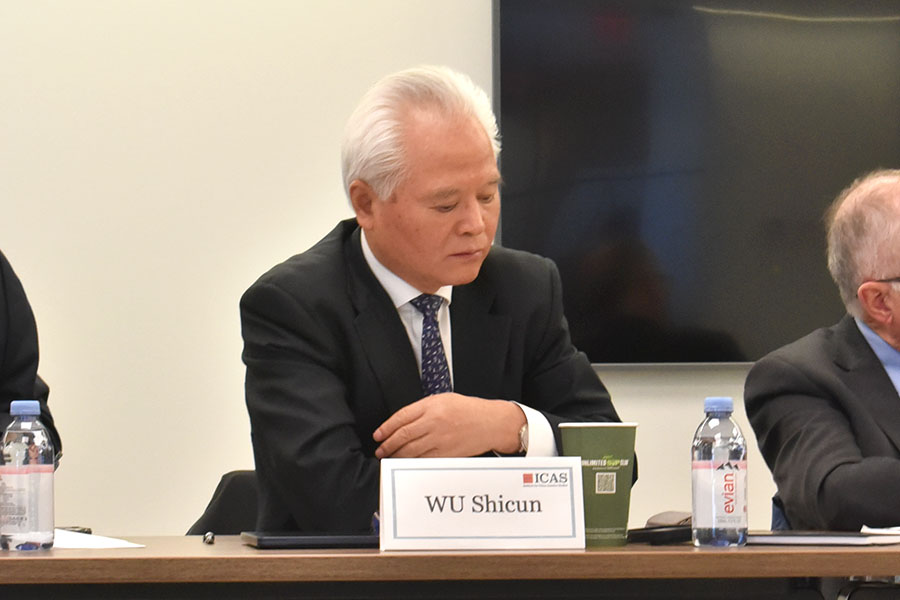
When addressing geopolitical issues, Wu Shicun noted that the center of gravity in the international landscape is undergoing profound shifts. From the United States' strategic recalibration toward Greenland and Latin America, to its ambiguous signals on the Taiwan Strait and South China Sea issues, and to Europe's security anxieties triggered by the Russia–Ukraine conflict, the influence of geopolitics has now extended into new domains such as technology, supply chains, and global public opinion. He emphasized that in the face of growing geopolitical bloc-formation, maintaining dialogue and communication is especially crucial: "Dialogue is not empty talk—it is a necessary avenue for exploring crisis management at the academic level."
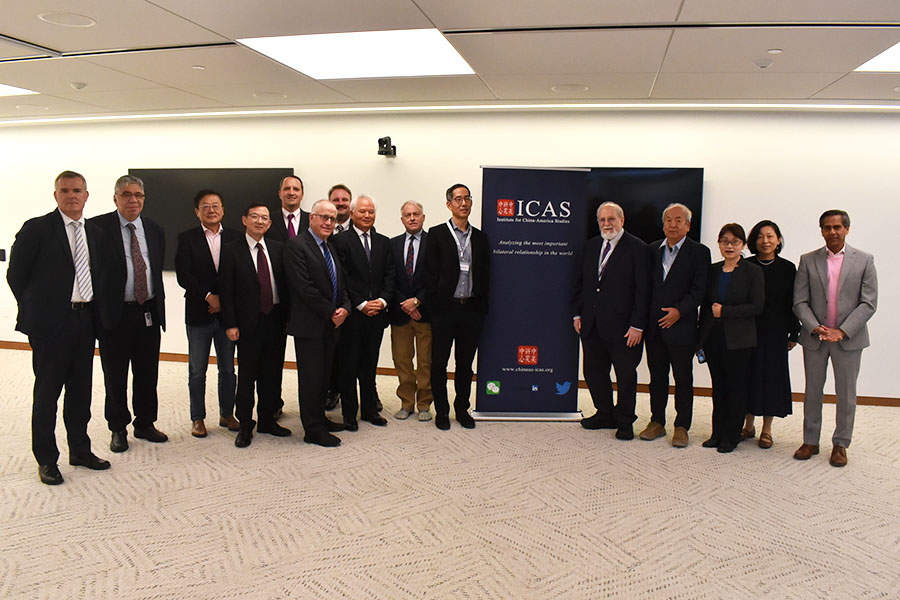
The Roundtable Forum focused on two major themes—trade and geopolitics—and featured in-depth exchanges among distinguished scholars and policy experts from China, the United States, Europe, and Latin America. Participants discussed strategic interactions and prospects for cooperation amid the reshaping of the global landscape. Scholars in attendance came from institutions including the Brookings Institution, the Association of German Chambers of Industry and Commerce (DIHK), the Chinese Academy of International Trade and Economic Cooperation (CAITEC), Harvard Kennedy School, the Cato Institute, Shanghai International Studies University, the German Institute for International and Security Affairs (SWP), the China Institute at the University of Alberta, and the Institute for China–Europe Studies (ICES), among others.
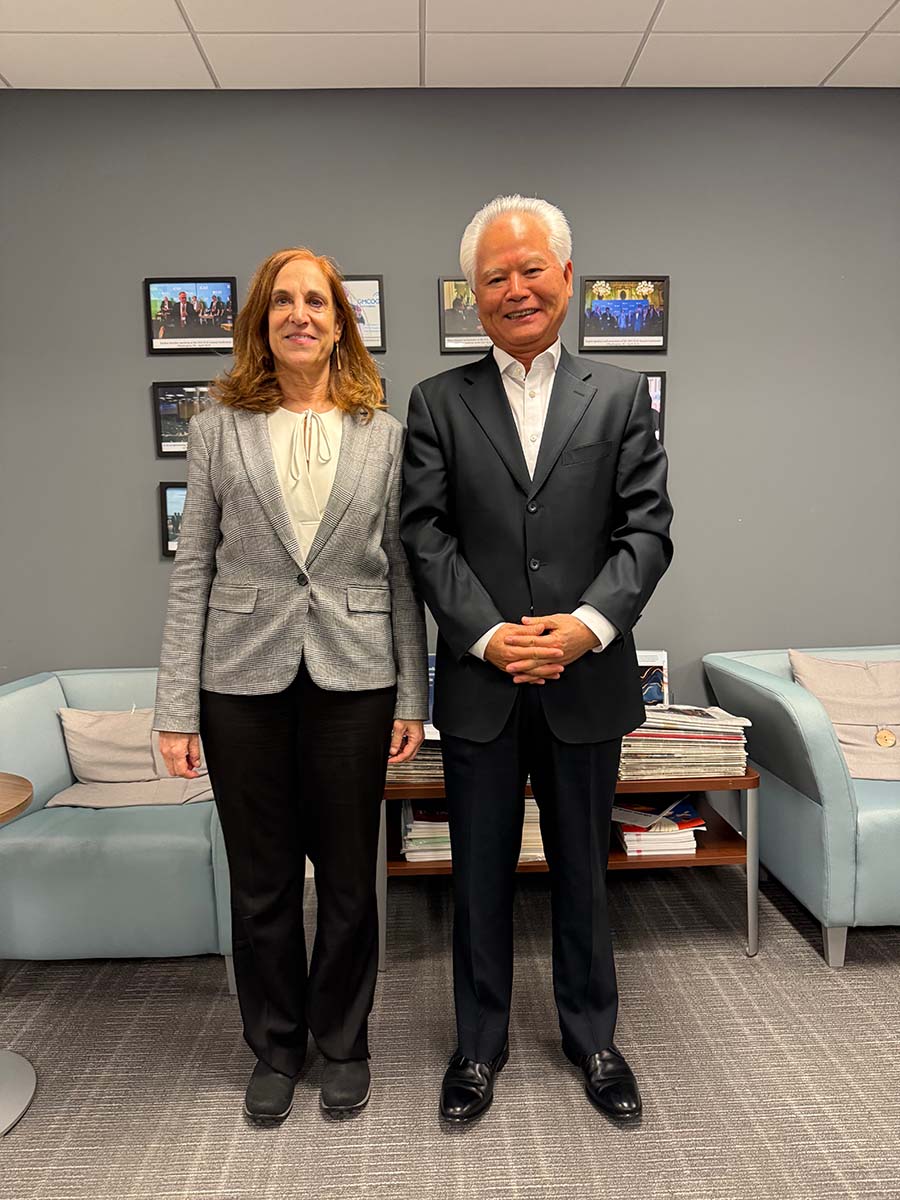
After the forum, Wu Shicun held discussions at ICAS with Bonnie Glaser, Director of the Indo-Pacific Program at the German Marshall Fund of the United States (GMF), as well as representatives of the National Committee on U.S.–China Relations. They exchanged views on advancing and improving Track-2 dialogue mechanisms on maritime issues between China and the United States.